


Exposed Aggregate Driveways Perth: Start to Finish Guide
An exposed aggregate driveway is one of the most popular premium concrete finishes across Perth, and for good reason: it looks sharp, it handles Western Australia's climate well, and it adds genuine kerb appeal to any home. But what actually happens between the day you sign a quote and the day you park your car on a finished driveway? At Woodlands Construct , we have been installing exposed aggregate driveways across Perth for over a decade, and we have found that homeowners who understand the process get better outcomes, ask better questions, and are never caught off guard. This guide walks you through every stage of installation, exactly as we do it.
Table of Contents
- What Is Exposed Aggregate Concrete?
- Step-by-Step: How Woodlands Construct Installs Your Driveway
- Materials Matter: Aggregate Types and Mix Choices for Perth
- Perth Suburb and Site Intelligence
- Frequently Asked Questions
- Ready to Get Started?
What Is Exposed Aggregate Concrete?
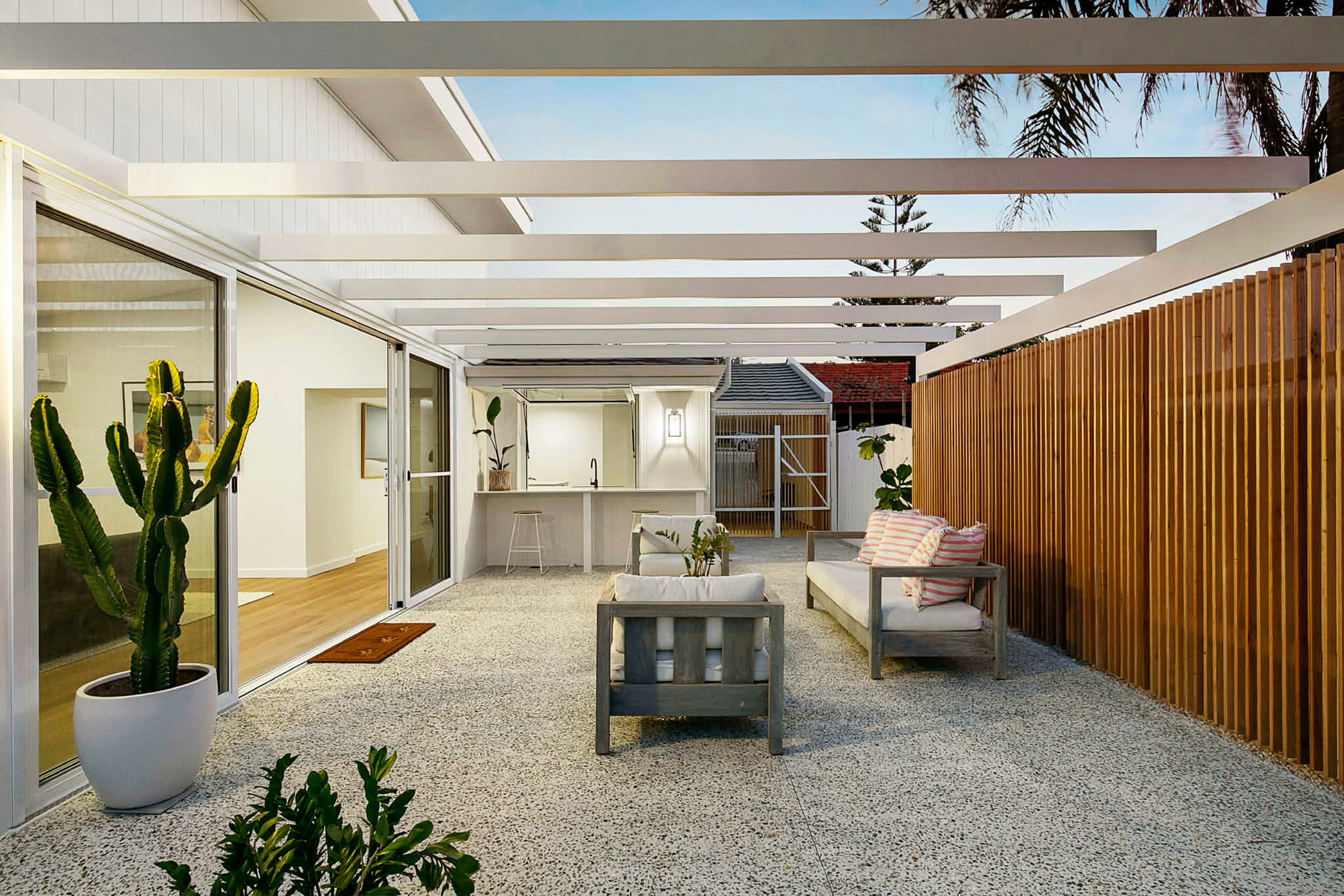
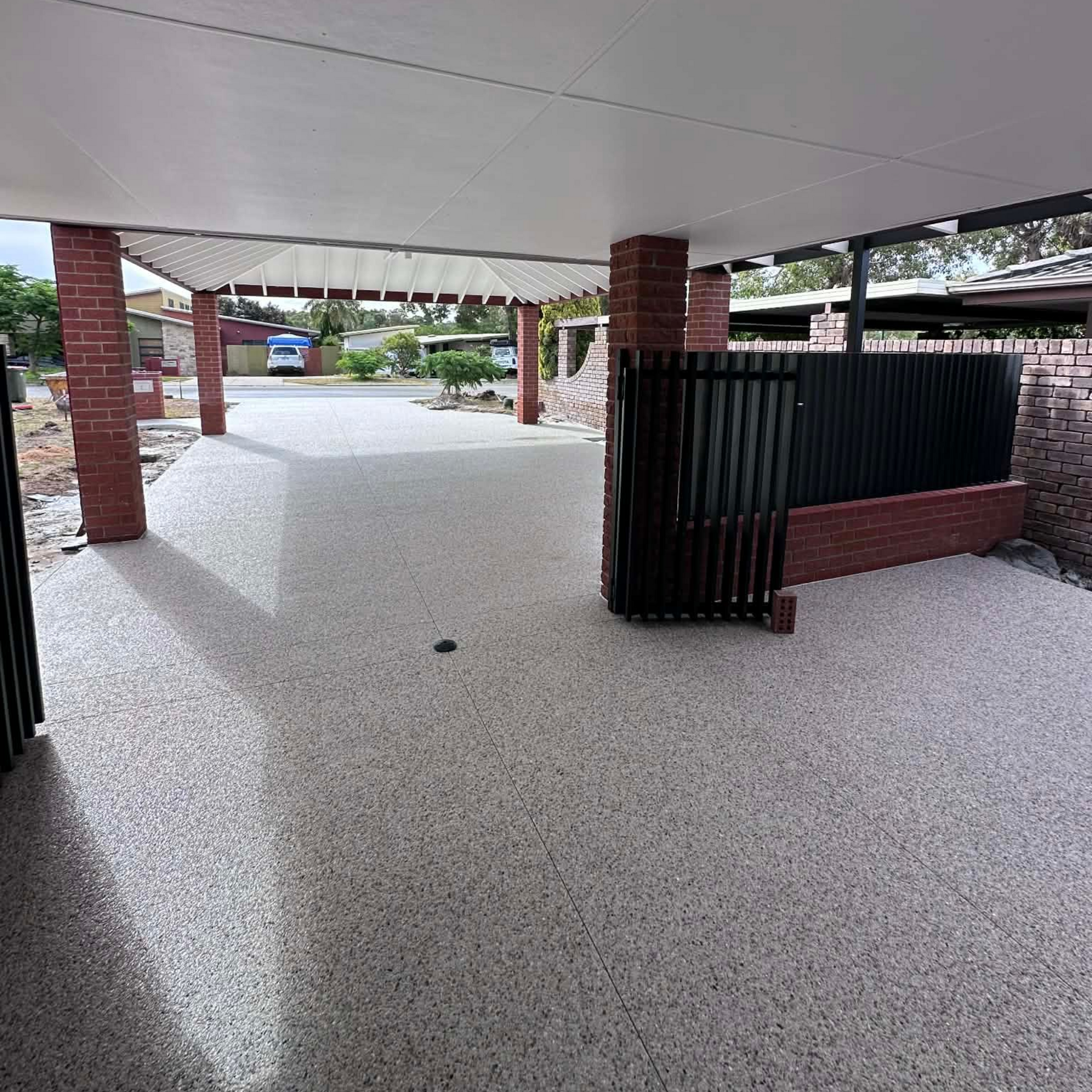
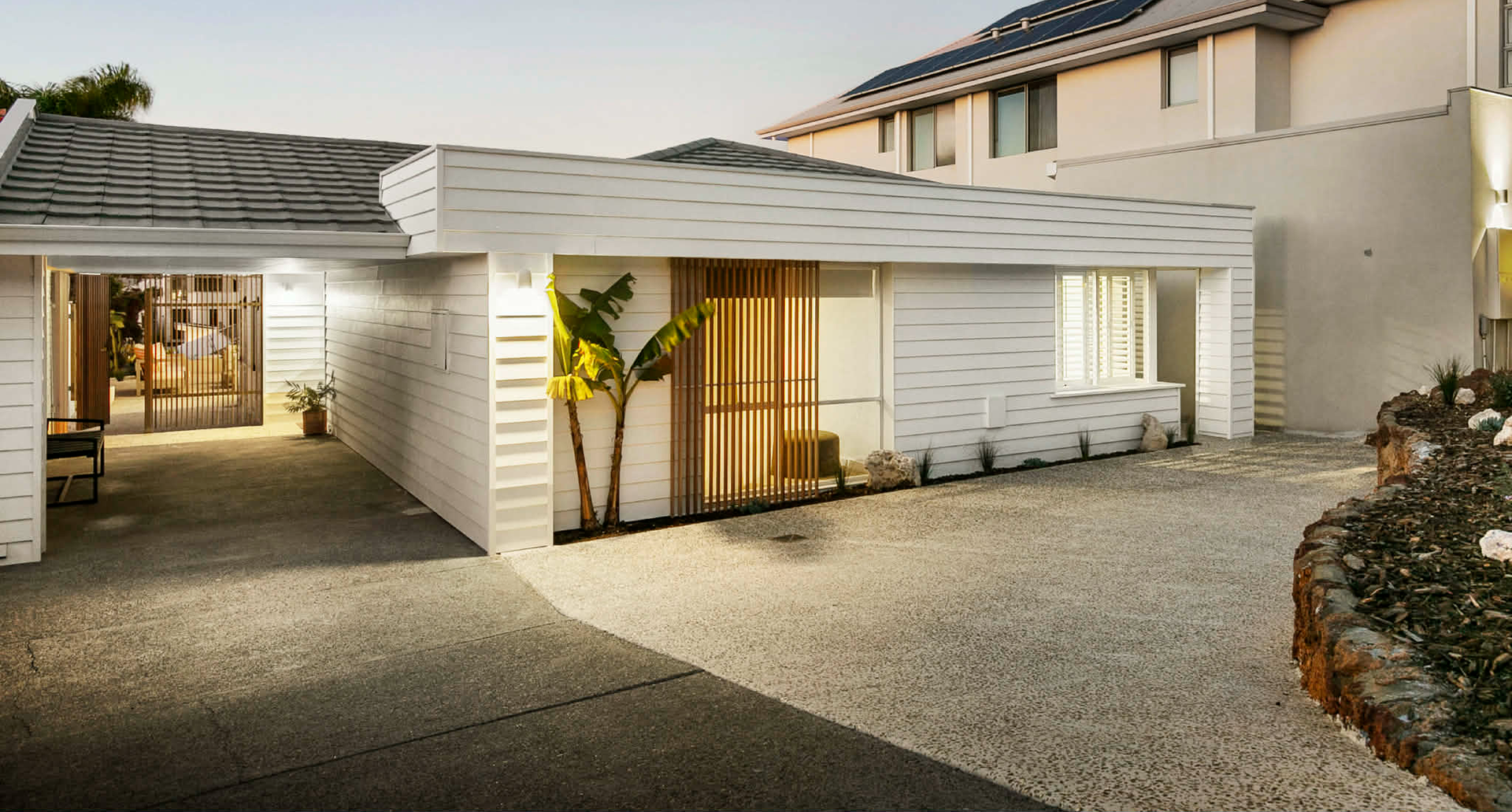
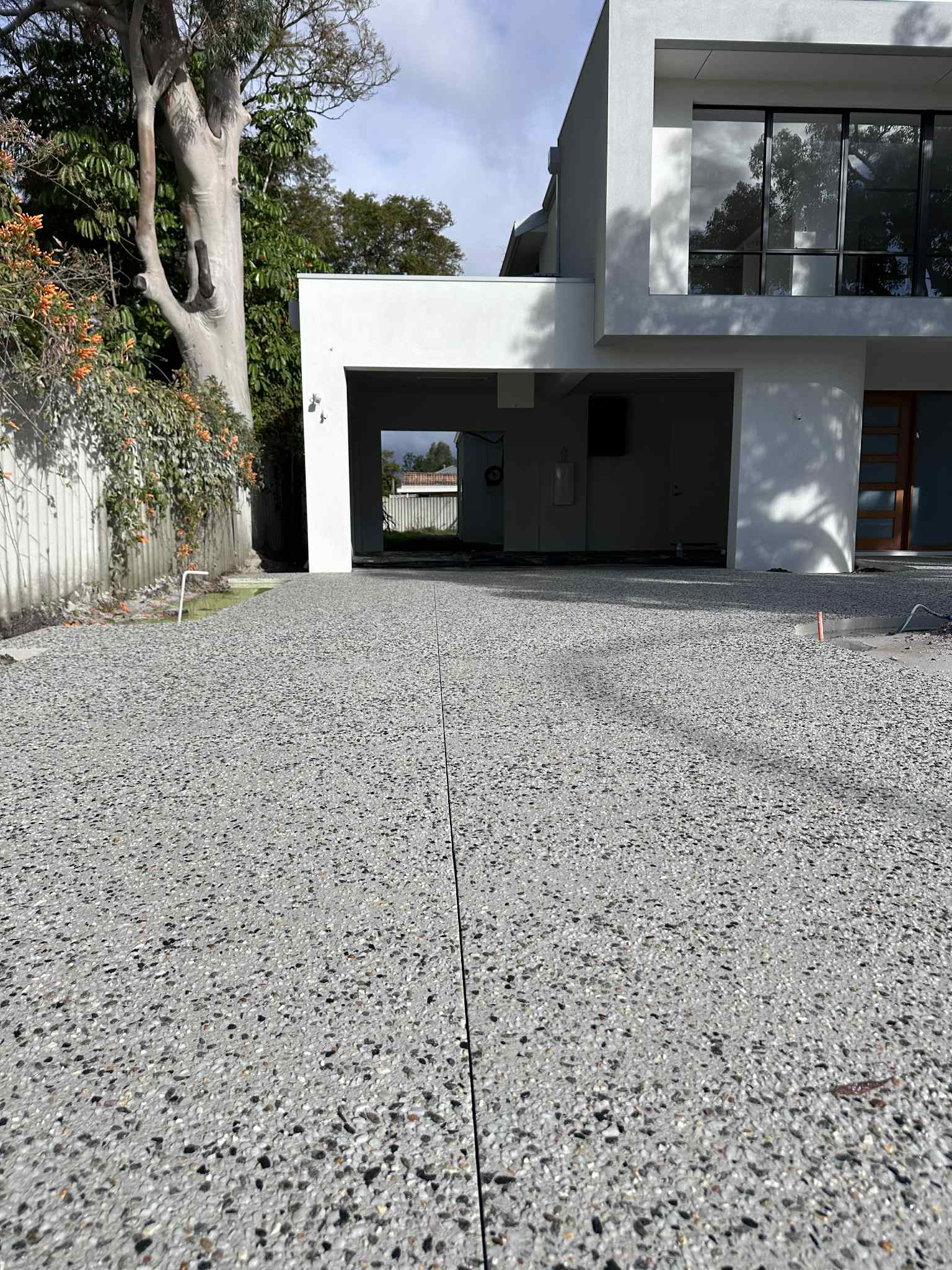
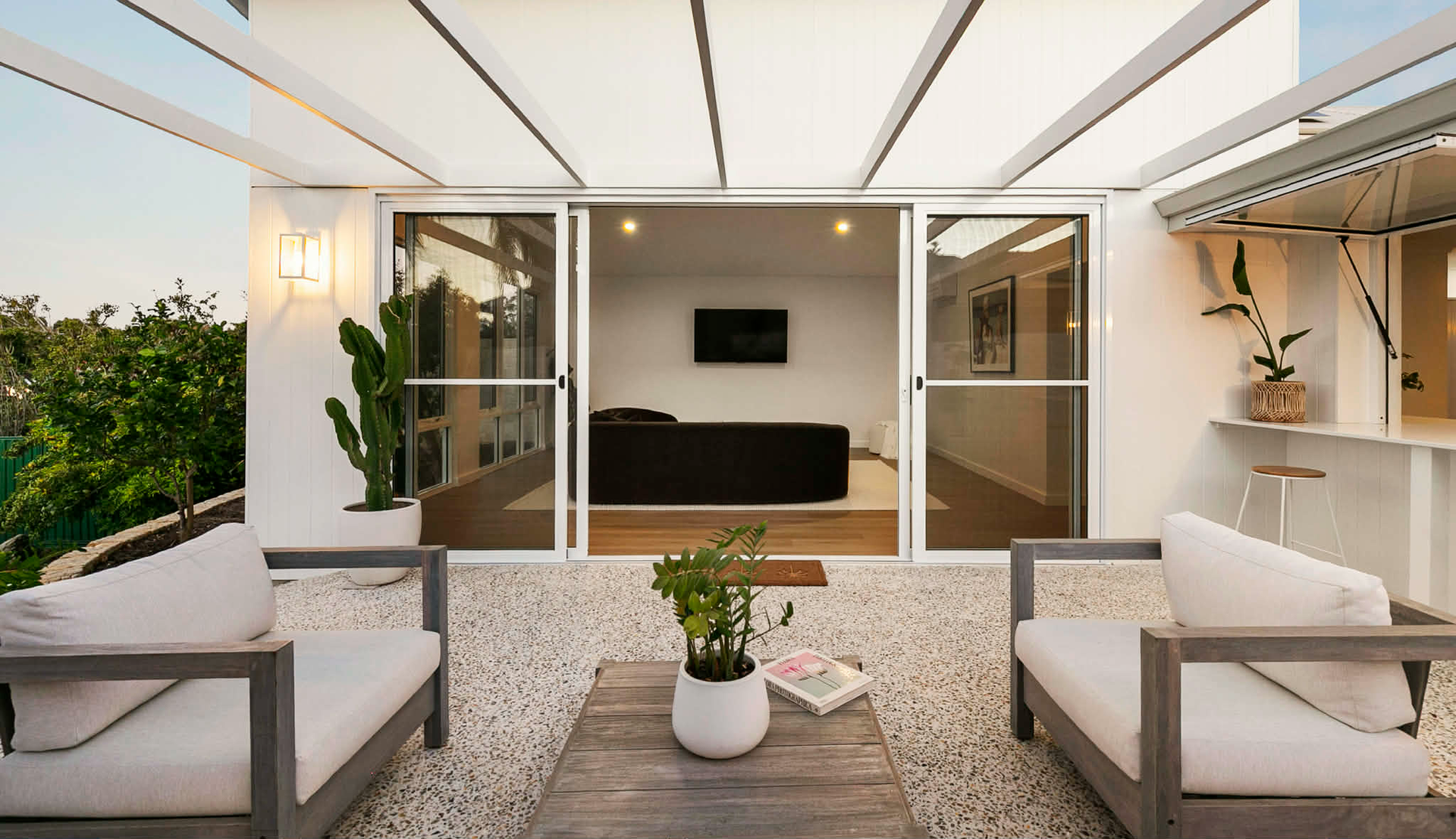
Exposed aggregate, sometimes called washed concrete or decorative aggregate concrete, is a finish where workers remove the top layer of cement paste after the pour to reveal the natural stone aggregate beneath. The result is a textured, slip-resistant surface with colour and character that plain grey concrete simply cannot match. You can see the full range of finishes we offer on our exposed aggregate driveway service page.
Step-by-Step: How Woodlands Construct Installs Your Driveway
Step 1: Site Measure, Council Crossover Check, and Design Sign-Off
Before any excavation starts, we measure the site and check your local council's crossover requirements. In the City of Wanneroo, for example, crossover widths and materials are tightly regulated, and some northern coastal suburbs require a stormwater management plan before work begins. We handle these checks upfront so nothing delays your pour day.
Step 2: Excavation and Sub-Base Preparation
We excavate to a minimum depth of 150mm below finished surface level, though we increase this on problem soils. In the northern suburbs, including Joondalup, Hillarys, and Currambine, the sandy coastal soils drain well but compact poorly, so we typically lay a 75mm compacted road base sub-base and verify compaction with a plate compactor before any formwork goes in. In suburbs like Baldivis, Piara Waters, and Ellenbrook, we are dealing with expansive clay soils that shrink and swell with moisture. On these sites we increase sub-base depth, add drainage fall to direct water away from the slab edge, and often specify a thicker slab. Our guide on Concrete Driveway Drainage: Preventing Puddles and Cracks in WA Homes covers this in more detail.
Step 3: Formwork
We set timber or steel formwork to the finished height and fall lines. A correctly set form controls slab thickness, fall direction, and edge alignment. We do not skip this step or estimate levels by eye.
Step 4: Reinforcement Mesh
We lay SL82 or SL92 steel reinforcement mesh across the prepared sub-base, supported on plastic bar chairs to keep the mesh at mid-slab depth, typically 50mm up from the bottom. This positioning is critical: mesh sitting on the ground does nothing to control cracking.
Step 5: The Concrete Pour
We specify a minimum 32 MPa concrete mix for all residential driveways. Standard slab concrete is often 20 or 25 MPa, which is not strong enough for repeated vehicle loads combined with Perth's temperature fluctuations. We order from Boral or Holcim with a low water-to-cement ratio in the mix design, typically below 0.50, because excess water weakens the paste matrix and affects how cleanly the aggregate exposes during washoff. Standard driveway slabs are poured at 100mm thickness. For driveways that will take heavier loads, caravans, trailers, or dual-cab utes, we pour at 125mm. The aggregate stone is already blended into the mix at the batching plant, so the colour and stone type you select during the design stage comes pre-mixed.
Step 6: Surface Retarder Application
Immediately after the pour is screeded and bull-floated to a level finish, we spray a chemical surface retarder across the entire slab. This product penetrates the top 5 to 10mm of the cement paste and slows its set, leaving the surface workable while the body of the slab continues to harden underneath. Getting the retarder application even is a skill in itself: thin patches will set too fast, thick patches will stay soft too long.
Step 7: Washoff, the Most Critical Stage
We return the following morning to wash off the retarded surface paste and reveal the aggregate. We never do same-day washoff. Timing depends on overnight temperature, the mix water-to-cement ratio, and the retarder product used, but next-day washoff is the correct window for a consistent, controlled reveal. We use low-pressure water washing with experienced operators, working in a consistent direction to avoid uneven exposure. Over-washing leaves aggregate sitting too proud of the surface, weakening the bond and creating a rough, uneven finish. Under-washing leaves a milky cement haze over the stone. The difference between a great exposed aggregate driveway and a disappointing one often comes down to this single stage.
Step 8: Acid Wash
Once the slab has cured for 24 to 48 hours after washoff, we apply a diluted hydrochloric acid wash to remove any remaining cement film from the aggregate surface. This step opens up the true colour and clarity of the stone. We neutralise the surface thoroughly before moving to the next stage.
Step 9: Expansion Cuts
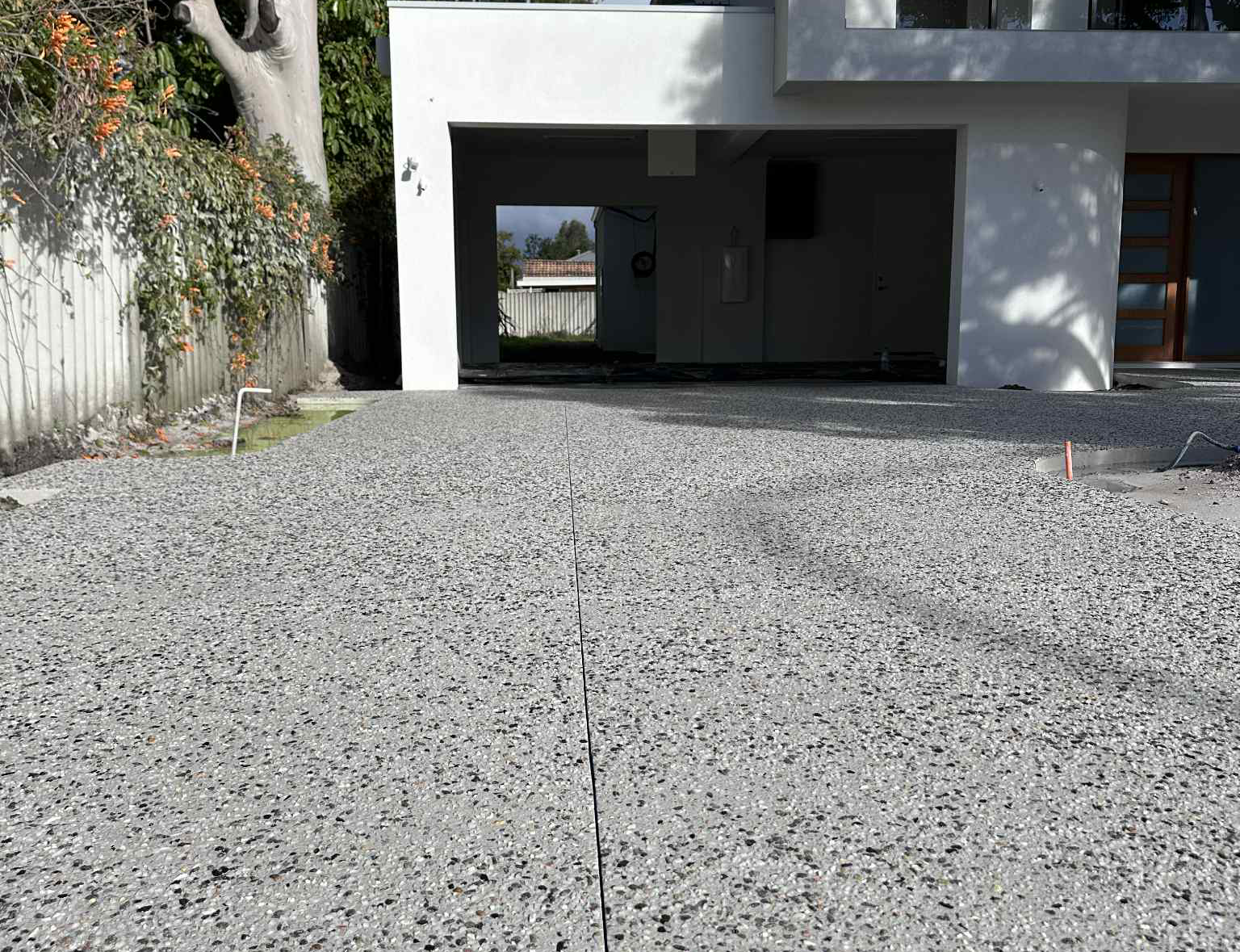
We cut control joints at no more than 3 metre intervals in each direction using a diamond blade saw. Control joints give the slab a predictable place to move as temperatures shift, reducing random surface cracking. We plan cut locations during the design stage so they align with the driveway's visual geometry rather than cutting through random positions.
Step 10: Curing Period
We allow a minimum of 7 to 14 days before sealing. The slab needs to reach sufficient moisture equilibrium so the sealer bonds correctly to the surface. Light foot traffic is fine after 48 hours. We advise homeowners to keep vehicles off the driveway for at least 7 days from pour date.
Step 11: Two-Coat Sealing
We apply two coats of a UV-stabilised, solvent-based acrylic sealer with a high solids content. In Perth's climate, where the UV index regularly exceeds 11 in summer, a budget water-based sealer will degrade within one to two seasons, turning chalky and leaving the aggregate vulnerable. The solvent-based acrylic we use penetrates the surface and forms a durable film that enhances stone colour, protects against oil and staining, and is recoatable. We recommend resealing every 3 to 5 years in WA conditions.
Materials Matter: Aggregate Types and Mix Choices for Perth
The aggregate you choose is not just an aesthetic decision. Stone size, colour, and reflectivity all affect how the driveway performs in Perth's conditions. We source locally available aggregate blends, including the following popular options:
- Cream and ivory river pebble: The most popular choice across the northwest corridor suburbs including Butler, Alkimos, and Eglinton. Cream tones reflect heat rather than absorbing it, making the driveway surface significantly cooler on bare feet during summer.
- Sand and soft grey blend: Works well with rendered or Colorbond homes in established suburbs like Duncraig, Kingsley, and Canning Vale. Neutral enough to complement most facade colours.
- Charcoal and dark basalt: A striking finish, but we are direct with clients about the heat factor. A dark aggregate driveway facing west in Joondalup or Hillarys will reach surface temperatures well above 60 degrees Celsius on a summer afternoon. If you love the look, we discuss orientation and shading before committing.
Aggregate stone is typically 10mm or 14mm in diameter. We use 10mm for driveways adjoining pedestrian areas where a finer texture suits foot traffic, and 14mm where the larger stone character is part of the design intent.
Perth Suburb and Site Intelligence
Perth is not a single soil type and the engineering of your driveway reflects that reality. Sloped blocks in the Hills, particularly in suburbs like Kalamunda and Lesmurdie, require step-downs in the slab, additional formwork complexity, and careful drainage design to prevent runoff from sheeting across footpaths. Sandy coastal sites in the northern suburbs need more careful compaction and sometimes a geotextile fabric layer between the soil and road base. Clay sites in the south and east require wider expansion joints and longer curing supervision.
Council crossover requirements also vary. Some local governments require approved crossover materials, specific widths, or drainage sumps at the kerb. We check these requirements before quoting, not after the job starts. That is not a courtesy, it is basic professionalism.
Our clients in the northern suburbs consistently tell us they wish they had asked more questions about drainage fall before their previous contractor poured. We build drainage fall discussion into every site consult as a non-negotiable item.
Frequently Asked Questions
How long does an exposed aggregate driveway installation take from start to finish in Perth?
The physical work spans 2 to 3 days: excavation and sub-base prep on day one, the pour and retarder application the same day, next-morning washoff on day two, then acid wash and expansion cuts on day two or three. After that, the slab needs 7 to 14 days to cure before we return for the two-coat seal. Homeowners should plan to keep vehicles off the driveway for at least 7 days from pour date and should expect the full sealed finish to be complete within two weeks of the pour. The most common frustration we hear from people who have used other contractors is being surprised by this timeline, so we set these expectations clearly in our quote documentation.
What concrete mix and MPa strength does Woodlands Construct use for exposed aggregate driveways?
We specify a minimum of 32 MPa for all residential driveway pours. This is stronger than standard slab concrete because driveways carry repeated dynamic vehicle loads and experience daily temperature cycling that stresses the concrete matrix. We order through Boral or Holcim with a controlled low water-to-cement ratio, and we reinforce with SL82 or SL92 mesh on bar chairs at mid-slab depth. Standard slabs are 100mm thick. Slabs designed for heavier loads are poured at 125mm or more. These are not upsells, they are minimum standards we hold to on every job.
What is the risk of over-exposure or under-exposure during washoff, and how does Woodlands Construct control it?
Over-exposure means washing too much slurry from the surface, leaving the aggregate stones sitting proud of the paste. This weakens the bond between stone and slab and creates an uneven, coarse texture. Under-exposure leaves a milky cement film over the stones that dulls the colour and looks patchy. We control this by scheduling washoff the following morning without exception, using low-pressure washing with experienced crew, and reading the set of the slab before starting. The washoff window is typically 2 to 4 hours wide and we manage the entire process ourselves rather than leaving it to a labourer.
How does Perth's climate affect which aggregate colour and sealer I should choose for my driveway?
Colour choice has a real performance impact in Perth. Darker aggregates, particularly charcoal and black basalt mixes, absorb significantly more solar radiation than lighter cream or sand tones, making the surface much hotter underfoot and under parked vehicles in summer. For west-facing driveways in full afternoon sun, we actively recommend lighter palettes. On the sealer side, Perth's UV intensity demands a UV-stabilised, solvent-based acrylic sealer with high solids content. Water-based budget sealers degrade quickly in WA's climate, fading within a season or two. We apply two coats of a premium UV-stable product on every job and advise resealing every 3 to 5 years to maintain protection and colour vibrancy.
Ready to Get Started?
Woodlands Construct has spent over a decade earning a 5-star Google rating by doing the job properly the first time. No shortcuts. No surprises. Just quality concrete. If you are planning an exposed aggregate driveway in Perth, whether you are in Duncraig, Baldivis, Alkimos, or anywhere in between, we are ready to walk you through the process on your specific site. Call us on 0433 510 118 or get a free quote online and we will get back to you promptly.
Recent Blog Post's
LOOKING FOR A TRUSTED CONCRETER IN PERTH?