
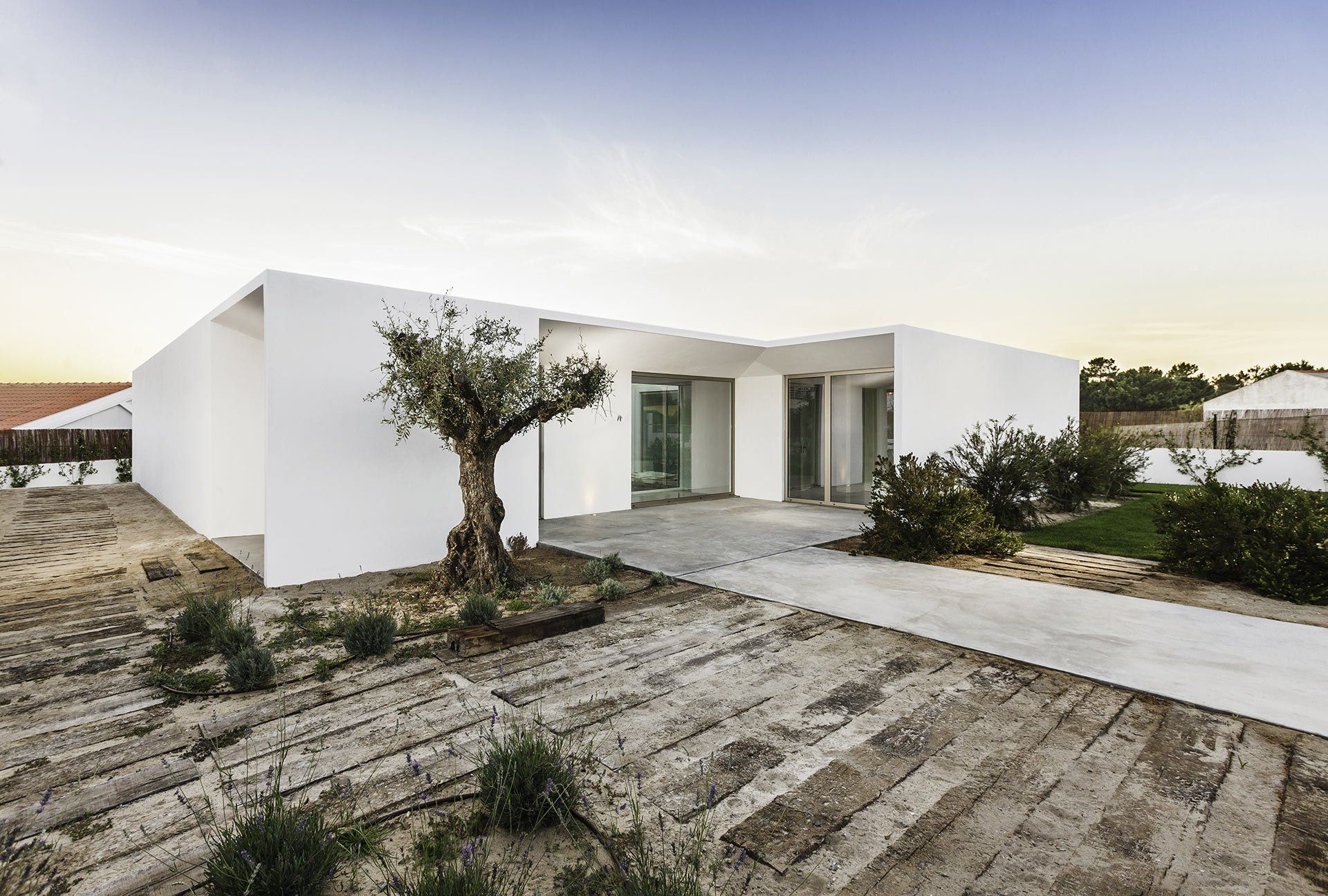



Honed Concrete Perth: Complete Guide to Indoor & Outdoor Finishes
Honed concrete is one of the most versatile finishes available to Perth homeowners, and it is also one of the most frequently misspecified. Get the mix wrong, grind to the wrong depth, or seal with the wrong product, and you end up with a surface that looks flat in twelve months or becomes dangerously slippery around the pool. At Woodlands Construct , we have been installing honed concrete across Perth for over a decade, and this guide covers exactly what we do on every job, why each decision matters, and how you can make the right call for your project before anyone picks up a trowel.
Whether you are planning a honed concrete pool surround in Alkimos, an indoor floor through an open-plan home in Nedlands, or a honed concrete driveway in Canning Vale, the information below gives you the technical grounding to brief a contractor properly and recognise quality work when you see it.
What Honed Concrete Actually Is
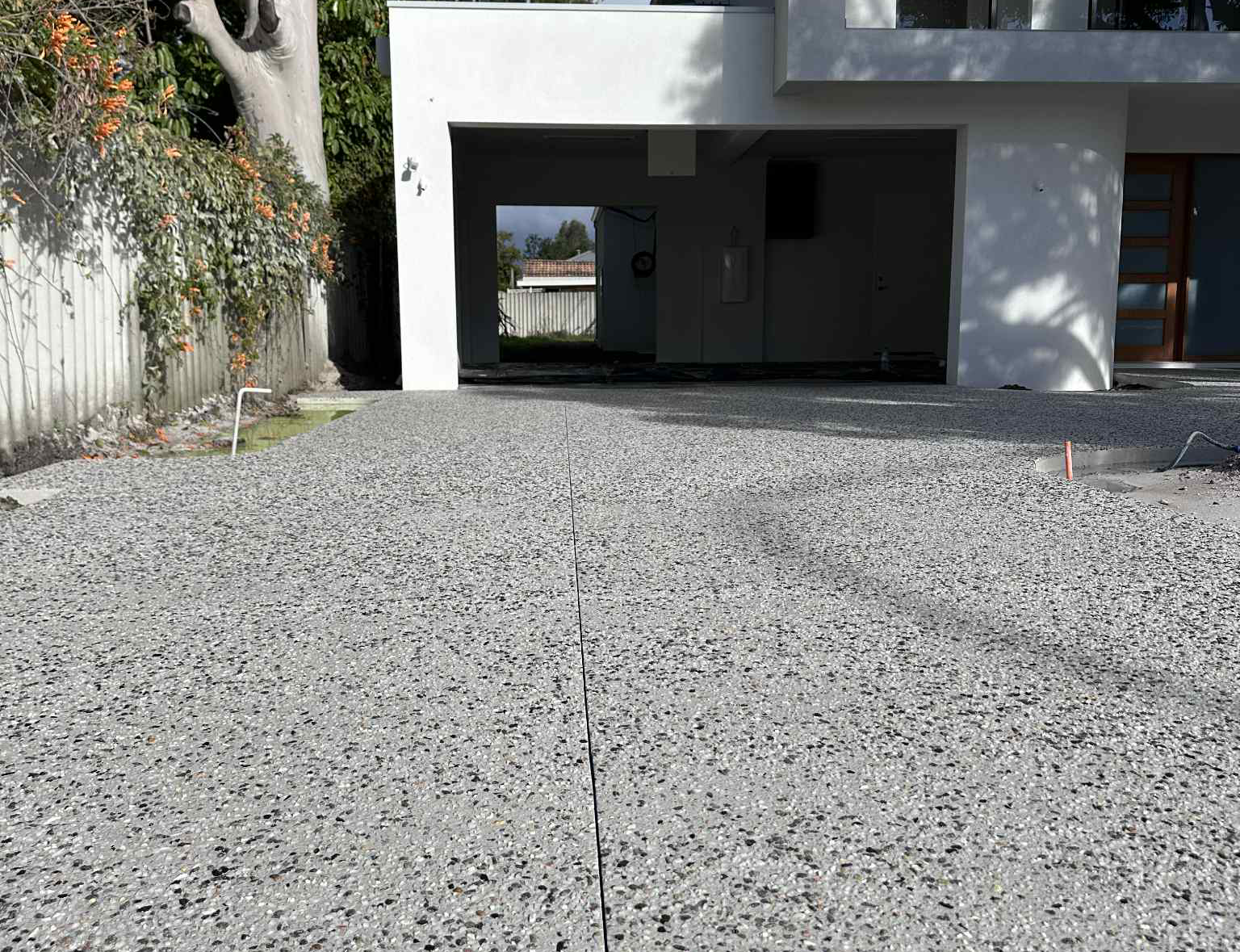
Honed concrete is a ground concrete surface. After the slab cures, diamond grinding discs progressively remove the top layer of cement paste to expose the aggregate beneath. The depth of grinding controls how much aggregate is visible. A light grind at 100 to 200 grit leaves a fine, minimal aggregate exposure with a matte surface. A deeper grind at 400 grit reveals more of the stone, creating a richer, terrazzo-like appearance.
This is the defining difference from exposed aggregate, where crews seed aggregate onto or broadcast it through the surface and wash the paste away while the concrete is still green. Honed concrete is finished after curing, which means the visual result is determined by what is in the mix, not by what happens on pour day. That makes the mix design the most important decision of the entire job.
Our honed concrete service covers residential driveways, pool surrounds, alfresco areas, indoor floors, and pathways across the full Perth metro area.
The Woodlands Construct Installation Process, Step by Step
Step 1: Site Preparation and Subbase Compaction
Perth's predominant sandy loam soils compact differently to the clay soils common in eastern states. Sandy subbase requires careful moisture conditioning before compaction to achieve adequate density. We compact to a minimum of 95% Modified Proctor Density, verified on larger jobs with a nuclear density gauge. For pool surrounds and indoor slabs where differential settlement is unacceptable, we specify a 50mm to 75mm compacted blue metal or road base layer over the prepared subgrade. Skipping this step is the single most common cause of slab cracking in Perth residential work.
Step 2: Formwork and Reinforcement
We form all slabs with steel-pinned timber or steel form boards set to grade, accounting for drainage falls on outdoor surfaces. Pool surrounds carry a minimum 1 in 50 fall away from the water. Alfresco areas and driveways are formed with a 1 in 100 cross-fall. We place SL62 reinforcing mesh as standard for residential slabs, with bar chairs holding the mesh at the correct 40mm cover from the base. Control joints are pre-planned at no greater than 3 metre intervals to manage shrinkage cracking predictably.
Step 3: The Concrete Mix
The aggregate in the mix is what you will see after grinding, so this decision shapes the entire aesthetic outcome. We source decorative aggregate blends through Boral and specify the aggregate type, size, and colour before ordering. Common options include white quartz (which produces a bright, light-coloured finish popular in Scarborough and City Beach coastal homes), river pebble blends (a warmer tone favoured in Ellenbrook and Baldivis estate builds), and granite aggregate blends for a darker, more contemporary result.
Our standard residential mix specification is:
- Concrete strength: 25 MPa for pedestrian areas, 32 MPa for driveways and high-load surfaces
- Pour thickness: 100mm for pedestrian slabs, 125mm for driveways
- Maximum aggregate size: 10mm to 14mm for a clean, dense surface after grinding
- Water-to-cement ratio: kept below 0.50 to minimise surface porosity
- Reinforcement: SL62 mesh throughout, with F72 specified for driveways
Step 4: The Pour and Cure
We pour and screed to grade, then apply a hard steel trowel finish to close the surface before grinding. Curing is a step that contractors cut corners on constantly in the industry. We apply a chemical curing compound immediately after finishing and allow a minimum 28-day cure before any diamond grinding begins. Grinding earlier than this risks surface delamination and inconsistent aggregate exposure.
Step 5: Diamond Grinding Grit Progression
Grinding begins with a coarse metal-bonded diamond disc, typically 30 to 50 grit, to open the surface and establish aggregate exposure level. We then progress through 100 grit, 200 grit, and 400 grit resin-bonded discs depending on the specified finish. Each pass removes grinding marks from the previous stage. A 200 grit finish is our standard for outdoor honed concrete. Indoor floors typically progress to 400 grit for a smoother barefoot feel. The entire grinding process for a 60 square metre alfresco takes approximately one to two days.
Step 6: Acid Wash and Sealing
After grinding, we apply a diluted acid wash to remove grout haze and any residual slurry from the grinding process. The slab is then thoroughly neutralised and allowed to dry completely before sealing, typically 24 to 48 hours depending on conditions.
Sealer selection varies by application zone:
- Outdoor areas: a UV-stable polyurethane or penetrating silane-siloxane sealer, reapplied every two to three years given Perth's intense sun
- Pool surrounds: a topical non-slip sealer system with a fine aggregate additive mixed in, applied as standard on every pool surround we install
- Indoor floors: a penetrating lithium silicate densifier followed by a low-sheen topical sealer rated for foot traffic and moisture
Indoor vs Outdoor: How the Specification Changes
The pour itself is largely the same indoors and out. What changes is the grinding depth, the grit progression, and the sealing system. Indoors, the aggregate exposure is usually set lower for a more refined aesthetic, the grit finish is taken higher for barefoot comfort, and the sealer is chosen for chemical resistance to cleaning products rather than UV stability.
Outdoors, slip resistance becomes the primary sealer decision. A standard matte honed surface has adequate grip for dry conditions, but any wet area, including alfresco zones that catch pool splash, pool surrounds, and entry paths exposed to rain, requires a non-slip additive in the sealer coat. This is not optional around pools where children are present.
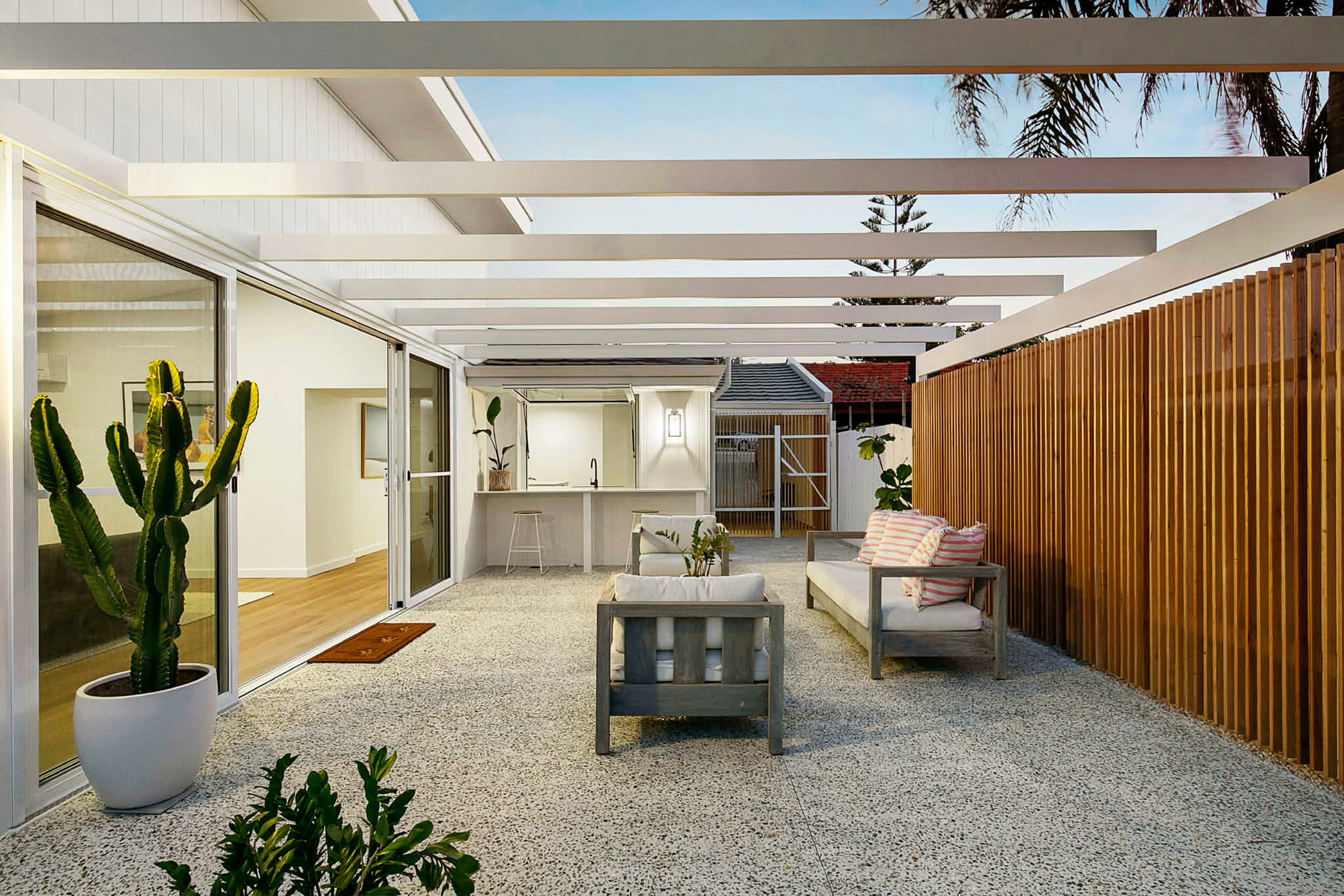
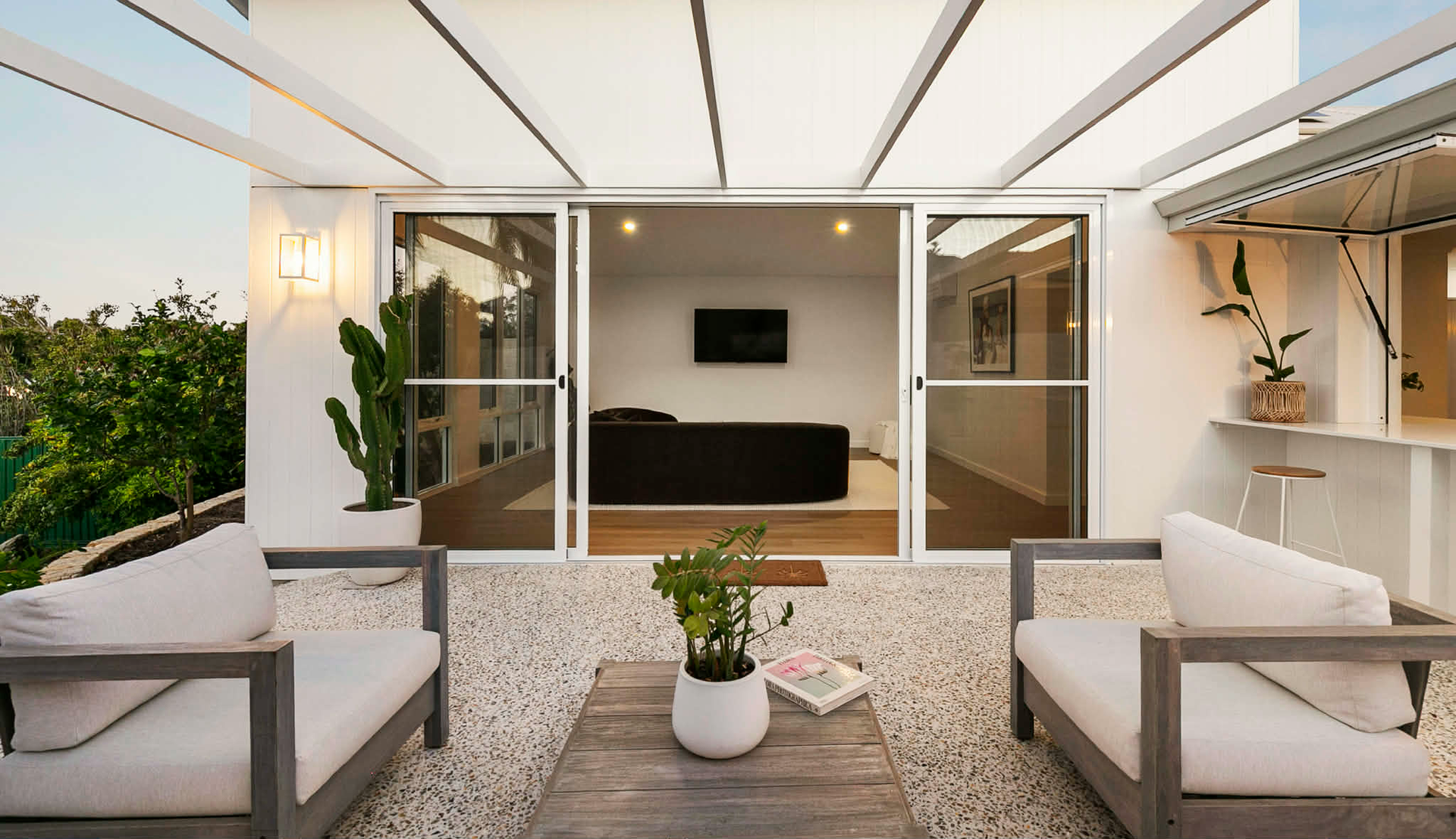
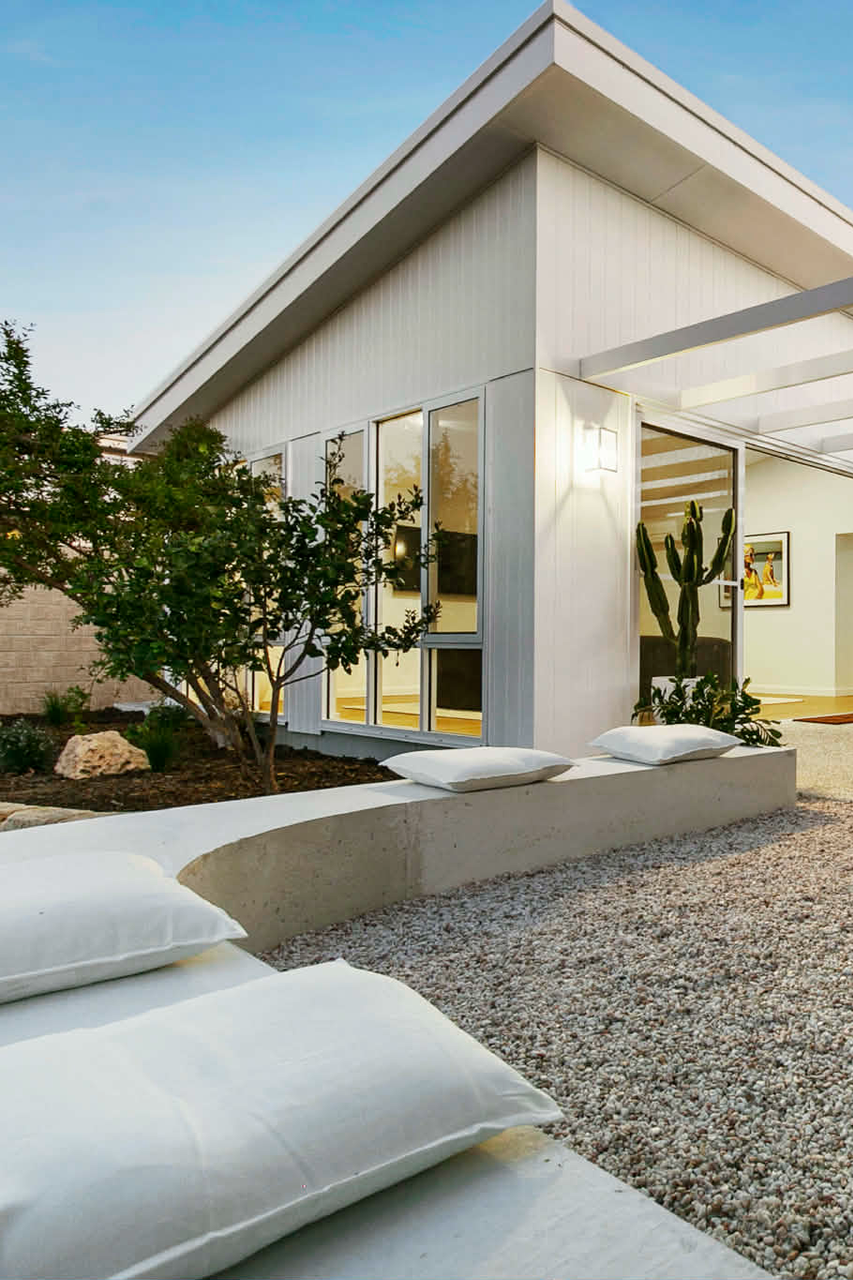
The seamless visual flow from an indoor honed floor through a glazed sliding door to an outdoor alfresco is one of the most requested design outcomes we see in Perth's northern suburbs and the luxury renovation market in Nedlands and Wembley Downs. Matching the aggregate blend and grind level across both zones creates a continuous surface that makes open-plan spaces feel significantly larger. Our team at Woodlands Construct plans both zones together at design stage to ensure a consistent result.
Perth Climate: Why It Changes Every Decision
Perth's Mediterranean climate is not a minor footnote for concrete specification. It is the central consideration. Summers regularly exceed 38 degrees Celsius, UV index peaks are among the highest in Australia, and the sandy subbase across most metro suburbs behaves differently to the clay profiles common in Melbourne or Sydney.
Heat retention matters enormously for outdoor surfaces. A dark exposed aggregate pool surround in a north-facing Joondalup backyard can reach surface temperatures that make barefoot walking painful by mid-afternoon. A light-coloured white quartz honed concrete surface in the same position will run 8 to 12 degrees cooler under the same conditions. This is a real, measurable difference that affects daily usability of your outdoor space through a Perth summer.
UV degradation of sealers is the other critical factor. We specify only UV-stable polyurethane topcoats for outdoor applications and set realistic expectations with every client: outdoor sealers in Perth need reapplication every two to three years. A sealer that lasts five years in Melbourne will degrade noticeably in three years under WA sun. Planning for this from the start means your honed concrete surface looks sharp for its full structural life of 25 to 30 years.
If you are also thinking about drainage design for outdoor concrete areas, our guide on Concrete Driveway Drainage: Preventing Puddles and Cracks in WA Homes covers the drainage falls, channel placement, and subbase drainage that every Perth outdoor slab needs.
Honed Concrete vs Exposed Aggregate in Perth
This is the most common comparison we field from Perth homeowners. Both finishes expose aggregate. The difference is how and when.
- Honed concrete is ground after curing, producing a flat, smooth surface with aggregate visible in cross-section
- Exposed aggregate is washed while green, leaving aggregate proud of the surface with a textured, non-flat profile
- Exposed aggregate has higher natural slip resistance due to the raised texture, but honed concrete with a non-slip sealer system meets the same safety standards for pool areas
- Honed concrete suits contemporary, minimalist architecture and indoor-outdoor flow designs; exposed aggregate suits traditional, cottage, and natural garden settings
- Honed concrete is typically 15 to 20 percent more expensive than standard exposed aggregate due to the grinding labour and sealing process
Neither finish is universally better. The right choice depends on your architecture, your colour palette, and how the space gets used. We talk through this with every client before quoting.
Frequently Asked Questions
What is the difference between honed concrete and polished concrete, and which is better for Perth outdoor areas?
Honed concrete is ground to a matte or low-sheen finish, typically 100 to 400 grit, and sealed with a penetrating or UV-stable topical sealer. Polished concrete is taken to a high gloss using a densifier and fine diamond grits above 800, and is primarily an indoor product. For Perth outdoor conditions, honed concrete is the correct specification. Polished concrete used outdoors becomes slippery once the gloss breaks down under UV, and that degradation happens quickly under WA sun. We do not install polished concrete outdoors for this reason.
How long does honed concrete last in Perth's climate, and how often does it need resealing?
A correctly installed honed concrete slab will last 25 to 30 years structurally with normal use. The sealer is the maintenance component. Outdoor surfaces in Perth need resealing every two to three years given the UV intensity and summer heat. Pool surrounds need the non-slip additive reapplied at each reseal. Indoor honed floors on a penetrating densifier system require far less maintenance, typically a light topcoat refresh every four to five years.
Is honed concrete slippery when wet, and is it safe around pools for children?
A standard matte honed finish is adequate for dry conditions, but wet areas require a non-slip sealer system with a fine aggregate additive. Woodlands Construct applies this as standard on every pool surround we install, with no exceptions. The slip resistance of honed concrete is determined by the sealer system, not the finish name. A correctly sealed honed concrete pool surround meets Australian standards for wet area surfaces and is safe for children with normal supervision.
Can honed concrete be used for indoor floors as well as outdoor areas, and does the specification change?
Yes, and the indoor-outdoor seamless floor is one of the most popular design outcomes we deliver for Perth homes. The concrete pour specification is essentially the same. What changes is the grit progression (typically taken to 400 grit indoors for barefoot comfort), the aggregate exposure level (set lower for a refined indoor aesthetic), and the sealer (a lithium silicate densifier with a low-sheen topical coat indoors, rather than a UV-stable polyurethane for outdoor use). We plan both zones together at design stage to ensure a consistent aggregate and colour match across the full surface.
Ready to Talk Honed Concrete for Your Perth Home?
Woodlands Construct installs honed concrete across the full Perth metro area, from pool surrounds in Alkimos and Ellenbrook to indoor floors and alfresco areas in Nedlands, Scarborough, and Canning Vale. Our clients consistently recognise our work through a 5-star Google rating built on honest advice and careful work at every stage of the job. No shortcuts. No surprises. If you want a specific mix recommendation, a site assessment, or a clear written quote, get a free quote through our contact page or call us directly on 0433 510 118.
Recent Blog Post's
LOOKING FOR A TRUSTED CONCRETER IN PERTH?