
Guide · April 2026
How Often to Seal Pool Surround Perth
How often a pool surround needs resealing, what chlorine and sunscreen do to it, and the signs it is overdue.
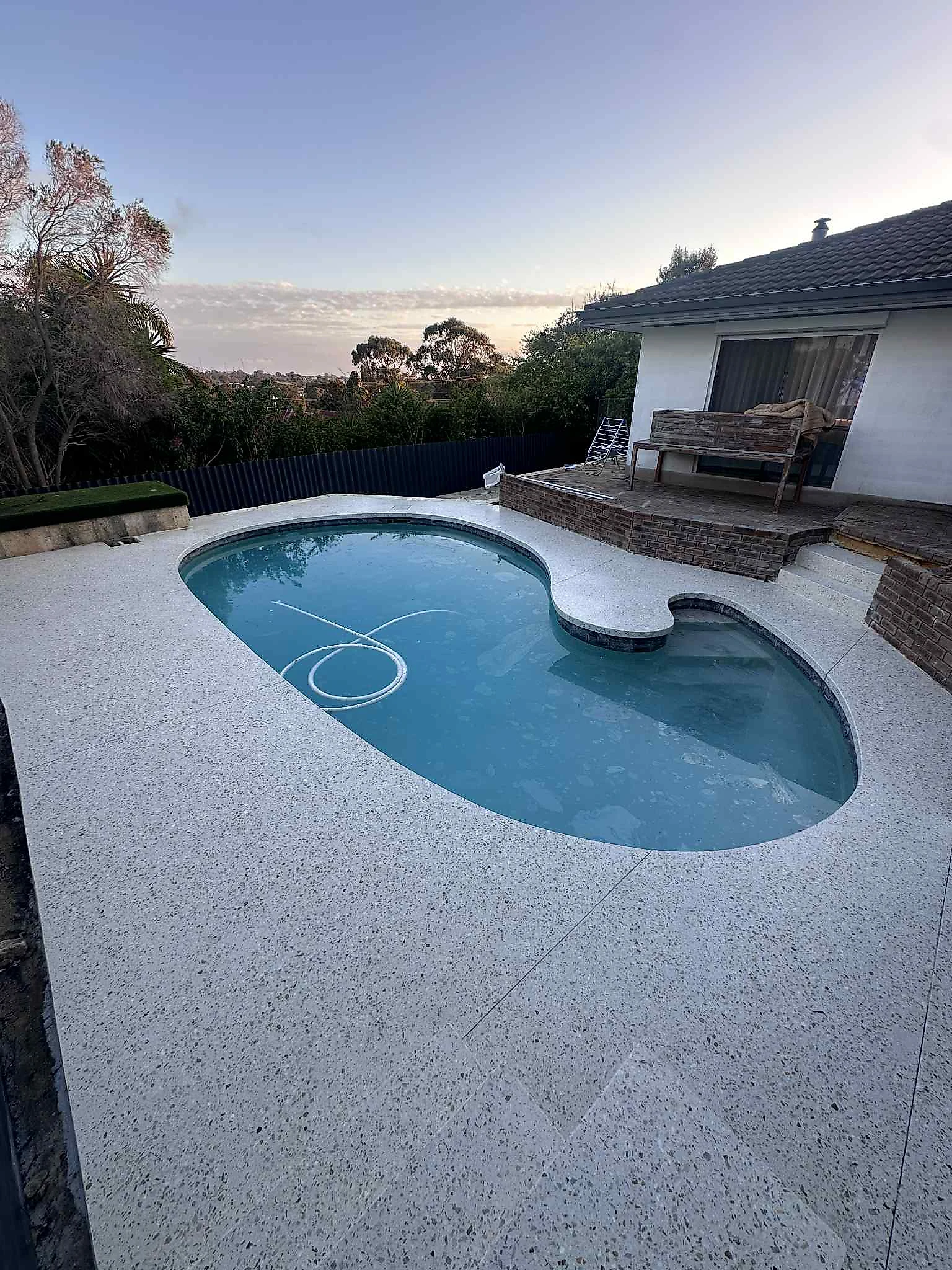
How Often Should You Seal Your Pool Surround? Advice for Perth Homes (2026 Guide)
Reseal most Perth pool surrounds every 2 to 4 years, and every 1 to 2 years if the area gets heavy traffic or full sun. The finish, how much the pool is used and how exposed the area is all move that number. Chlorine, salt and sunscreen are what break the seal down, and the signs it is overdue are below. Getting the timing right can save thousands in long-term repairs.
Pool surrounds here face some of the harshest conditions in Australia, intense UV, chlorine, salt, and constant foot traffic. While concrete is built to last, sealing plays a critical role in protecting its appearance, safety and longevity.
This guide breaks down exactly when, why and how often you should seal your concrete pool area in Perth.
- Why Sealing Your Pool Surround Matters
- How Often Should You Seal Concrete in Perth?
- Signs Your Pool Surround Needs Resealing
- Different Finishes & Their Sealing Requirements
- What Affects Sealer Lifespan in Perth?
- Choosing the Right Sealer for Pool Areas
- Common Mistakes to Avoid
- FAQs: Pool Surround Sealing Perth
- Final Advice for Perth Homeowners
1. Why Sealing Your Pool Surround Matters
Concrete pool surrounds are constantly exposed to water, chemicals and UV rays. Without proper sealing, surfaces can deteriorate quickly.
Sealing helps to:
- Protect against moisture penetration
- Prevent staining from leaves, dirt and chlorine
- Maintain colour and finish
- Improve slip resistance
- Extend the life of your concrete
For Perth homes, sealing isn’t optional, it’s essential maintenance.
2. How Often Should You Seal Concrete in Perth?
General guideline:
- Every 2 to 4 years for most pool surrounds
- Every 1 to 2 years for high-traffic or exposed areas
- Every 3 to 5 years for premium penetrating sealers
However, Perth’s climate can shorten these timeframes due to intense sun and heat.
Pro Tip: If your pool area is in full sun most of the day, expect to reseal more frequently.
3. Signs Your Pool Surround Needs Resealing
Look out for these indicators:
- Water soaking into the surface instead of beading
- Fading or dull appearance
- Surface becoming rough or patchy
- Increased staining
- Slippery areas developing
4. Different Finishes & Their Sealing Requirements
Highly durable but still benefits from sealing to protect colour and improve longevity.
Commonly used for exposed aggregate concrete pool surrounds.
Requires consistent sealing to maintain its smooth finish and protect against wear.
Ideal for modern pool areas using honed concrete for alfresco areas.
Plain / Coloured Concrete
More porous and prone to fading, making sealing even more important.
5. What Affects Sealer Lifespan in Perth?
Several factors impact how long your sealer will last:
Sun Exposure
Full sun areas break down sealers faster.
Pool Chemicals
Chlorine and salt can degrade protective coatings.
Foot Traffic
Heavy use wears down the surface over time.
Cleaning Methods
Harsh pressure washing can strip sealers prematurely.
Understanding these helps you plan maintenance properly.
6. Choosing the Right Sealer for Pool Areas
Not all sealers perform the same, especially around pools.
Recommended options:
✔ Penetrating sealers: long-lasting, natural look ✔ Matte finish sealers: reduce glare and heat ✔ Slip-resistant additives: improve safety
Professional concrete sealing in Perth ensures the correct product is used for your specific finish and environment.
7. Common Mistakes to Avoid
Avoid these common issues:
❌ Waiting too long between resealing ❌ Using high-gloss sealers in pool areas ❌ DIY sealing without proper preparation ❌ Not cleaning the surface before sealing ❌ Ignoring early signs of wear
These mistakes can lead to costly repairs or premature surface failure.
8. FAQs - Pool Surround Sealing Perth
Have a question we have not answered?
Get in contact and we can give you an answer.
- How do I know if my concrete needs sealing? If water no longer beads on the surface, it likely needs resealing.
- Can I seal my pool surround myself? It’s possible, but professional application ensures better results and longevity.
- Does sealing make concrete slippery? Not if the correct sealer and additives are used.
- Is sealing required for all concrete finishes? Yes, especially in high-exposure areas like pool surrounds.
- How long does sealing take? Typically 1 to 2 days including preparation and curing time.
If water no longer beads on the surface, it likely needs resealing.
It’s possible, but professional application ensures better results and longevity.
Not if the correct sealer and additives are used.
Yes, especially in high-exposure areas like pool surrounds.
Typically 1 to 2 days including preparation and curing time.
9. Final Advice for Perth Homeowners
Sealing your pool surround is one of the simplest and most effective ways to protect your investment.
By staying on top of maintenance and using the right products, you can extend the life of your concrete, maintain its appearance and ensure it remains safe for everyday use.
At Woodlands Construct, we provide expert advice and professional solutions tailored to Perth conditions, helping homeowners get the most out of their outdoor spaces.
Get in touch today for expert guidance or a quote on your pool surround.
More guides
- April 2026 Cooling Concrete Finishes Perth Why some slabs are unbearable in February and others are fine. Colour, texture, and what it costs to get right.
- April 2026 Liquid Limestone Maintenance Perth Keeping liquid limestone looking right: cleaning, sealing, and avoiding the cracks and stains that spoil it.
- April 2026 Liquid Limestone Around Pools in Perth Whether liquid limestone suits a pool surround, how it handles heat and salt, and the upkeep it asks of you.
- March 2026 Building a Child-Safe Pool Area Using Concrete Finishes Grip, heat and edges. What to specify around a pool so it is safe for kids without ending up looking clinical.
Want a number for your own job?
Rough size, what is there now, and roughly when. Regan will tell you straight what it involves.