
Guide · January 2026
How Thick Should a Driveway Be? WA Guide 2026
How thick a driveway needs to be in WA, what the standards actually say, and why soil and vehicle weight change it.
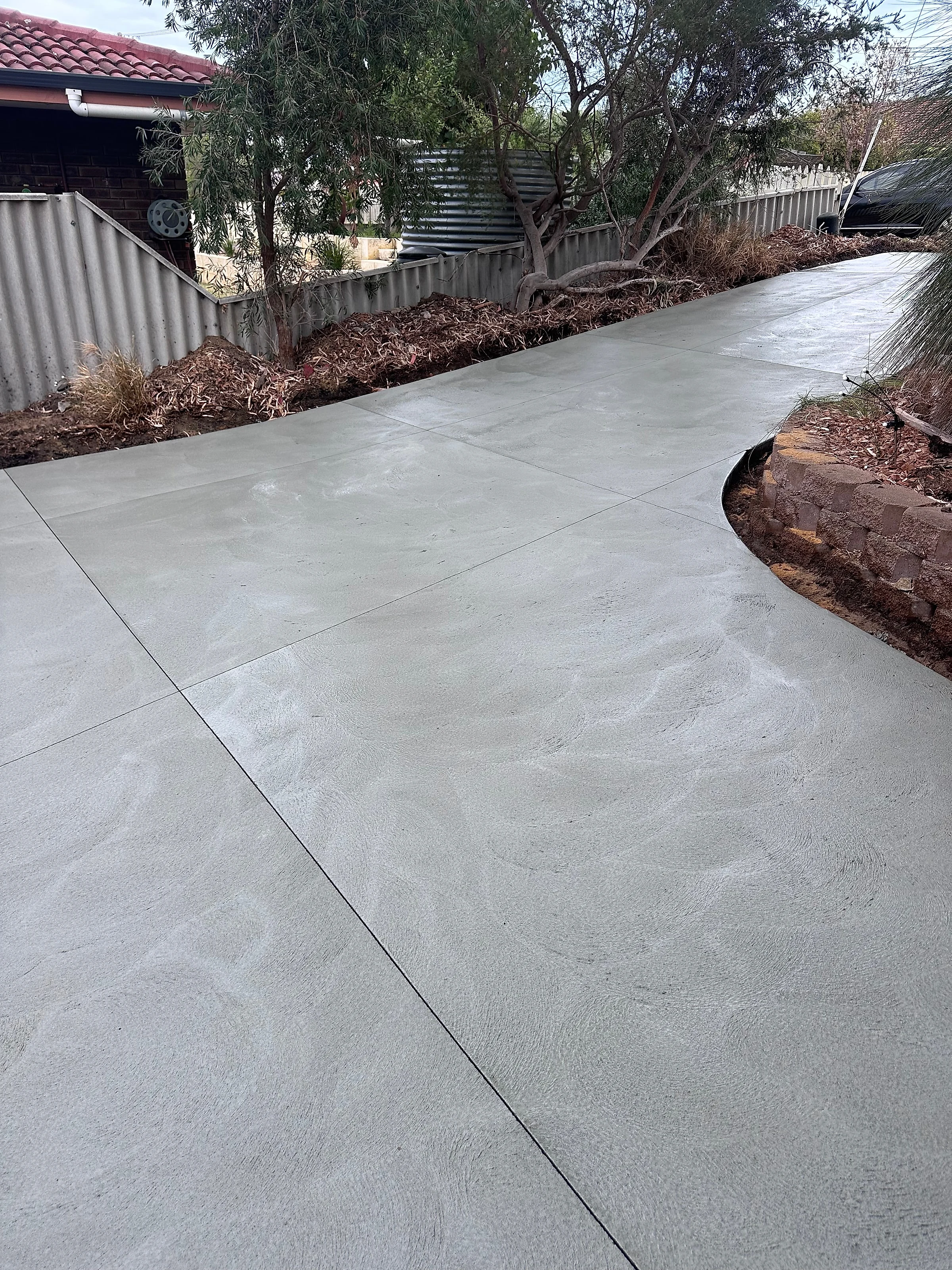
How Thick Should a Driveway Be? WA Engineering Standards Explained (2026 Guide)
A standard residential driveway in WA should be 100mm thick, which suits passenger vehicles and light utes, provided the base preparation, reinforcement and drainage are done properly. Go to 120mm or 150mm if you park a caravan, boat or trailer, if the driveway takes heavy vehicles or dual-cab utes, if it is steep, or if the soil is sandy, reactive clay or fill.
That 100mm is a baseline, not a one-size-fits-all answer, and the rest of this guide explains what moves it.
Concrete driveway thickness directly affects strength, longevity, cracking resistance and load capacity. In Western Australia, soil conditions, vehicle weights and climate mean that driveways must be engineered correctly, not guessed.
At Woodlands Construct, we design and pour concrete driveways that meet WA engineering standards and perform reliably under Perth conditions. This 2026 guide explains the correct concrete driveway thickness, what influences it, and how to avoid costly mistakes.
- Why Driveway Thickness Matters
- Standard Concrete Driveway Thickness in WA
- When a Thicker Driveway Is Required
- WA Soil Conditions & Their Impact
- Reinforcement Requirements Explained
- Common Thickness Mistakes Homeowners Make
- FAQs: Driveway Thickness in Perth
- Related Services & Internal Links
- Final Advice
1. Why Driveway Thickness Matters
Concrete driveway thickness isn’t about appearance, it’s about structural performance.
Incorrect thickness can lead to:
- Cracking under vehicle loads
- Edge failure
- Premature surface wear
- Movement and sinking
- Expensive repairs or full replacement
In Perth, where many homes accommodate SUVs, utes, trailers, caravans and boats, driveway thickness must be planned carefully.
2. Standard Concrete Driveway Thickness in WA
Minimum Recommended Thickness (Residential):
- 100mm (10cm), standard residential driveway
- Suitable for passenger vehicles and light utes
This thickness aligns with common WA residential engineering guidelines, provided that:
- Proper base preparation is completed
- Reinforcement is installed correctly
- Drainage and joints are designed properly
A 100mm slab is the baseline, not a one-size-fits-all solution.
3. When a Thicker Driveway Is Required
Certain conditions require a thicker slab for safety and durability.
120mm to 150mm Driveways Are Recommended If:
- You park caravans, boats or trailers
- The driveway supports heavy vehicles or dual-cab utes
- There is frequent turning or braking
- The driveway has steep slopes
- Soil conditions are poor or reactive
4. WA Soil Conditions & Their Impact
Western Australia has a wide range of soil types, including:
- Sandy soils (common in coastal suburbs)
- Reactive clay soils
- Fill or disturbed soils in new estates
How soil affects thickness
- Sandy soils drain well but require strong compaction
- Reactive clays expand and contract, increasing cracking risk
- Poor soils often require thicker slabs and stronger reinforcement
5. Reinforcement Requirements Explained
Thickness alone isn’t enough, reinforcement plays a critical role.
Common reinforcement options:
- SL72 mesh (standard residential use)
- SL82 mesh (heavier vehicle loads)
- Edge thickening along driveway sides
- Additional bar reinforcement in high-stress areas
Reinforcement must be positioned correctly within the slab, not left on the ground, to be effective.
6. Common Thickness Mistakes Homeowners Make
❌ Assuming thinner concrete saves money
Thin slabs fail faster and cost more long-term.
❌ Ignoring vehicle weight
Modern vehicles are heavier than ever.
❌ No edge thickening
Edges take the most load and crack first.
❌ Poor base preparation
Even thick concrete fails on weak ground.
❌ Using generic “one size fits all” specs
Every driveway should be tailored to the site.
7.FAQs
Have a question we have not answered?
Get in contact and we can give you an answer.
- Is 100mm thick enough for my driveway? Yes for standard residential use, but heavier vehicles may require more.
- What thickness is best for caravans or boats? 100 to 150mm with stronger reinforcement is recommended.
- Does exposed aggregate need to be thicker? No, finish type doesn’t change thickness, load does.
- Can thickness vary across the driveway? Yes, edges and load zones are often thickened.
- Do councils specify driveway thickness? Councils focus on crossovers and access, but engineering standards still apply.
Yes for standard residential use, but heavier vehicles may require more.
100 to 150mm with stronger reinforcement is recommended.
No, finish type doesn’t change thickness, load does.
Yes, edges and load zones are often thickened.
Councils focus on crossovers and access, but engineering standards still apply.
8. Related Services
These services are closely related to driveway design and construction:
- Concrete Driveways Perth
- Grey Concrete Driveways Perth
- Exposed Aggregate Driveways Perth
- Concrete Sealing Perth
- Architectural Concrete Perth
Each driveway is engineered based on site conditions and usage.
9. Final Advice for Homeowners
Concrete driveway thickness is not an area to cut corners. The right thickness, combined with proper preparation and reinforcement, ensures your driveway lasts decades, even under Perth’s harsh conditions.
At Woodlands Construct, we assess every site individually and build driveways that meet WA engineering expectations and real-world use.
Contact us today for expert advice and a free driveway quote.
More guides
- January 2026 Concrete Sealing Perth What sealing actually does, how long it lasts on each finish, and how to tell when a surface is due for another coat.
- January 2026 Concrete Driveway Drainage Perth Why driveways puddle and crack, how the falls and joints should be set out, and what to ask before the pour.
- January 2026 Concrete Alfresco Flooring Perth Finishes that suit an open plan alfresco, what each costs to run out, and which ones date faster than others.
- December 2025 Concrete for Coastal Homes Perth Salt air, sand and wind change what lasts. The finishes that hold up near the coast and the ones that do not.
Want a number for your own job?
Rough size, what is there now, and roughly when. Regan will tell you straight what it involves.