
Guide · December 2025
Concrete for Coastal Homes Perth
Salt air, sand and wind change what lasts. The finishes that hold up near the coast and the ones that do not.
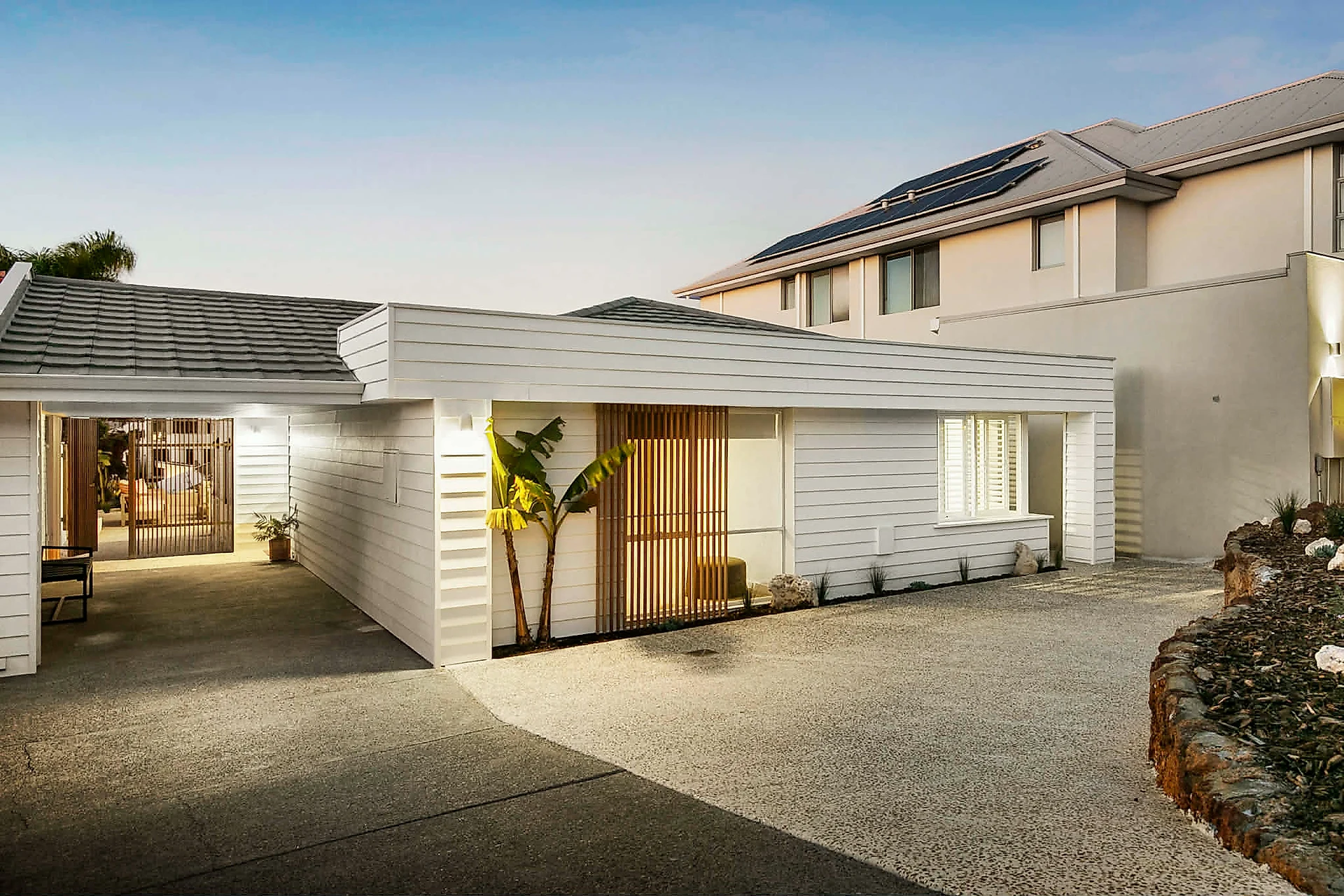
Concrete for Coastal Homes: Best Finishes for Salty WA Conditions (2026 Guide)
For a coastal Perth home, exposed aggregate is the most reliable finish: it is naturally slip-resistant, its texture hides minor wear, and it holds up under UV and moisture. Honed concrete suits alfrescos and pool areas because salt residue washes off it easily. Whichever you choose, sealing is what actually determines how long it lasts near the beach.
Salt air, moisture, strong UV exposure and sandy soils all accelerate wear if surfaces aren’t designed and installed correctly.
At Woodlands Construct, we work through Perth’s coastal and western suburbs, from North Beach and Scarborough down to City Beach. This guide explains how to choose the right concrete finishes for coastal homes, so your outdoor spaces stay durable, safe and visually appealing for years.
- Why Coastal Conditions Affect Concrete
- Best Concrete Finishes for Coastal Homes
- Where to Use Each Finish Around Coastal Properties
- The Importance of Sealing in Coastal Areas
- Common Coastal Concrete Mistakes to Avoid
- FAQs: Coastal Concrete in Perth
- Related Services
- Final Advice & Next Steps
1. Why Coastal Conditions Affect Concrete
Concrete near the coast faces more stress than inland areas. Salt particles carried in the air settle on surfaces, moisture penetrates unsealed concrete, and strong UV exposure accelerates fading and surface breakdown.
Common coastal challenges include:
- Salt attack on unsealed concrete
- Accelerated surface wear
- Increased staining and discolouration
- Higher risk of corrosion in reinforcement
- Faster degradation of low-quality finishes
This makes finish selection, preparation and sealing critical for coastal homes.
2. Best Concrete Finishes for Coastal Homes
Not all concrete finishes perform equally in salty environments. Below are the most reliable options for Perth’s coastal suburbs.
Exposed Aggregate Concrete
One of the most popular coastal finishes in Perth.
Why it works well near the coast: ✔ Naturally slip-resistant ✔ Textured surface hide’s minor wear ✔ Durable under UV and moisture ✔ Ideal for driveways, paths and pool surrounds
Exposed aggregate performs exceptionally well in beachside areas where safety and durability matter.
A smooth, refined finish commonly used for alfrescos and pool areas.
Coastal benefits: ✔ Easy to clean salt residue ✔ Modern appearance ✔ Cool underfoot in summer ✔ Slip-resistant when sealed with additives
Honed concrete is ideal for coastal patios and entertaining spaces.
A great option for blending with coastal architecture.
Why homeowners choose it: ✔ Light coastal tones reduce heat absorption ✔ Colour runs through the slab (not a surface coating) ✔ UV stable when sealed properly
Light greys, sands and off-whites are particularly effective near the coast.
Used for feature elements like steps, bench seats and pathways.
Best for: ✔ High-end coastal homes ✔ Custom outdoor features ✔ Statement entry areas
Architectural concrete requires expert detailing but delivers outstanding results in coastal environments.
3. Where to Use Each Finish Around Coastal Properties
Driveways
✔ Exposed aggregate
✔ Coloured concrete (light tones)
Patios & Alfrescos
✔ Honed concrete
✔ Coloured concrete
✔ Architectural concrete
Pool Surrounds
Pathways & Side Access
✔ Standard grey with sealing
Feature Areas
✔ Architectural concrete ✔ Custom steps or bench seating
4. The Importance of Sealing in Coastal Areas
Sealing is non-negotiable for coastal concrete
.
Benefits of sealing near the coast:
- Blocks salt penetration
- Protects against moisture ingress
- Prevents staining and colour fade
- Extends the life of the slab
- Makes cleaning easier
In coastal suburbs, concrete should be sealed shortly after curing and resealed every 2 to 3 years, depending on exposure.
5. Common Coastal Concrete Mistakes to Avoid
❌ Skipping sealing
Salt damage accelerates quickly on unsealed slabs.
❌ Choosing dark colours
They absorb heat and show salt residue more easily.
❌ Poor drainage planning
Coastal rain and sand movement make drainage essential.
❌ Using inexperienced contractors
Coastal concrete requires specific knowledge and materials.
❌ Ignoring maintenance
Regular cleaning extends lifespan significantly.
6.FAQs
Have a question we have not answered?
Get in contact and we can give you an answer.
-
- Does salt air damage concrete? Yes, especially if the concrete is unsealed or poorly finished.
-
- What finish lasts longest near the coast? Exposed aggregate and honed concrete perform best when sealed correctly.
- 3.How often should coastal concrete be resealed? Every 2 to 3 years, or sooner in highly exposed areas.
-
- Is concrete slippery near pools by the beach? Not when the correct finish and slip-resistant sealer are used.
-
- Can existing coastal concrete be restored? Yes, cleaning, resealing or resurfacing can significantly improve performance.
Yes, especially if the concrete is unsealed or poorly finished.
Exposed aggregate and honed concrete perform best when sealed correctly.
Every 2 to 3 years, or sooner in highly exposed areas.
Not when the correct finish and slip-resistant sealer are used.
Yes, cleaning, resealing or resurfacing can significantly improve performance.
7. Related Services & Internal Links
If you live near the coast, explore these services designed for Perth conditions:
- Exposed Aggregate Perth
- Honed Concrete Perth
- Architectural Concrete Perth
- Concrete Pool Surrounds Perth
- Concrete Patios Perth
Each service is tailored to withstand WA’s coastal environment.
8. Final Advice for Coastal Homeowners
Coastal homes demand concrete that’s built to last. The right finish, preparation and sealing make all the difference between a surface that struggles, and one that performs for decades.
At Woodlands Construct, we specialise in durable, coastal-ready concrete solutions across Perth’s shoreline suburbs.
Contact us today for expert advice and a free quote tailored to your coastal home.
More guides
- December 2025 Concrete for Perth Renovations & Extensions Matching new concrete to a house that is already there, working around what stays, and sequencing the pour.
- December 2025 Top Mistakes When Choosing a Concreter The things that go wrong when picking a concreter, and the questions that sort a good one from a cheap one.
- January 2026 Concrete Sealing Perth What sealing actually does, how long it lasts on each finish, and how to tell when a surface is due for another coat.
- January 2026 How Thick Should a Driveway Be? WA Guide 2026 How thick a driveway needs to be in WA, what the standards actually say, and why soil and vehicle weight change it.
Want a number for your own job?
Rough size, what is there now, and roughly when. Regan will tell you straight what it involves.